

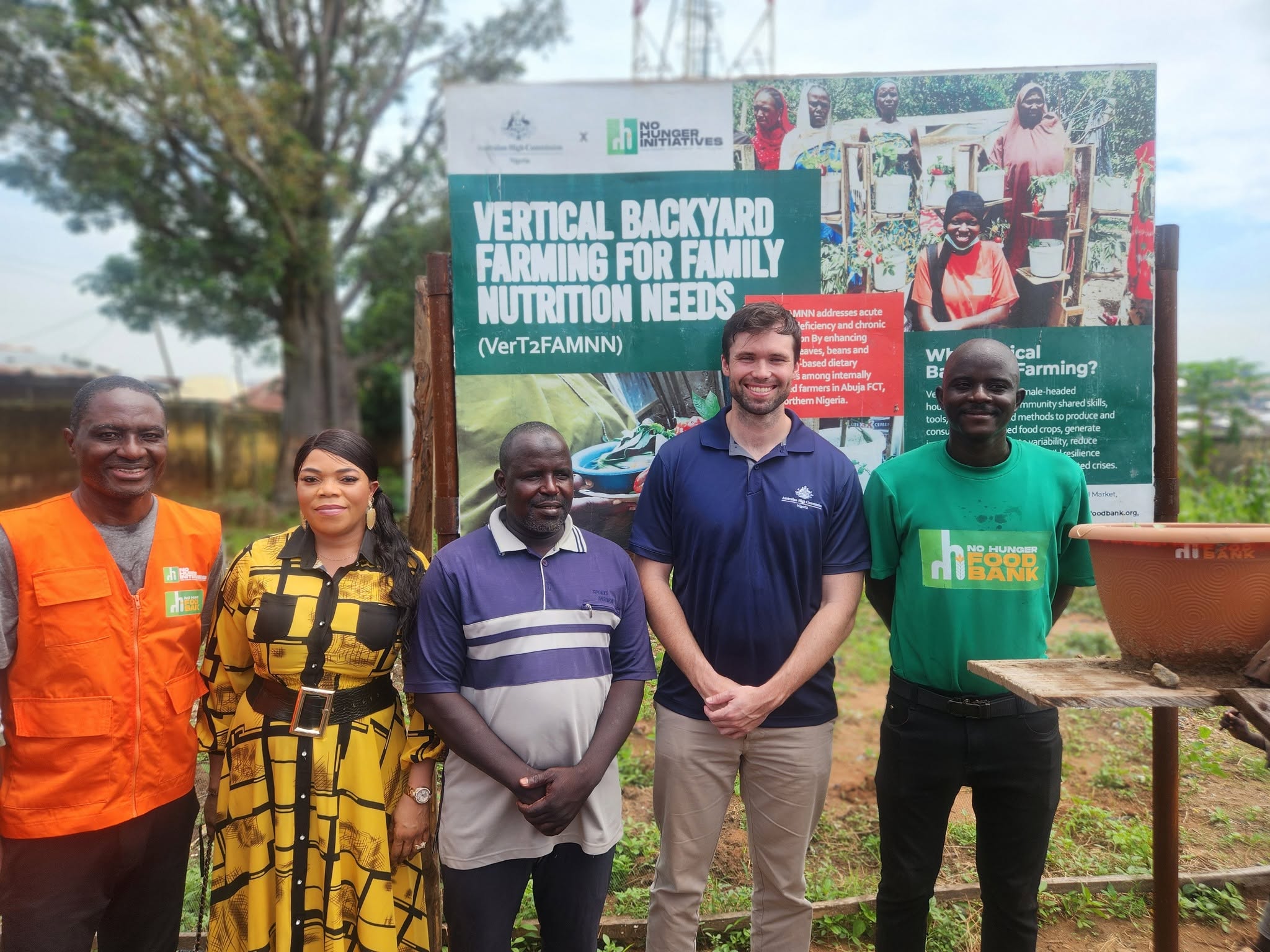
The Australian High Commission has visited a community-led food assistance project at the Karon Majigi Internally Displaced Persons (IDP) Camp in Abuja, highlighting efforts to improve family nutrition and support vulnerable displaced households.
The visit was made to the No Hunger Food Bank’s Direct Aid Program project, an initiative focused on strengthening food security and improving the wellbeing of displaced women and families through practical and sustainable community-based solutions.
During the visit, representatives of the Australian High Commission observed first-hand the impact of the initiative on beneficiaries and the wider community. The project provides support aimed at helping displaced households address nutritional challenges while building their capacity to develop sustainable solutions.
The delegation received a warm welcome from beneficiaries, who expressed their appreciation through songs, dancing and messages of gratitude.
The reception, according to the High Commission, reflected the resilience, enthusiasm and determination of the displaced community despite the challenges they continue to face.
The Australian High Commission said the experience underscored the importance of locally led initiatives in delivering meaningful and lasting change within vulnerable communities.
Australia reaffirmed its commitment to supporting local organisations through its Direct Aid Program, which provides assistance to initiatives designed to improve the lives of vulnerable populations and address community-level challenges.
The visit also highlighted the role of partnerships between international development programmes and local organisations in responding to humanitarian needs while empowering communities to take ownership of solutions affecting their livelihoods and wellbeing.
The Karon Majigi project is one example of how targeted community support can contribute to improving nutrition and strengthening resilience among displaced families in Nigeria.
À propos de l'auteur