


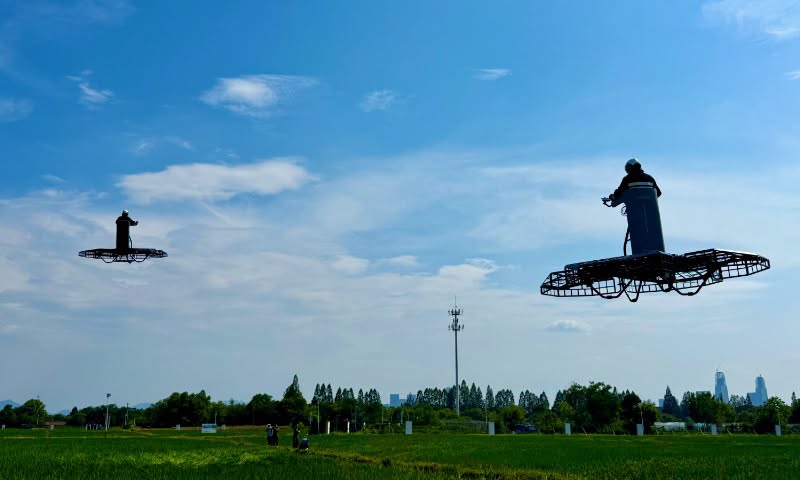
China has unveiled what is being described as the world’s first manned electric vertical take-off and landing (eVTOL) aircraft designed to be operated from a standing position, marking another development in the country’s rapidly advancing low-altitude aviation sector.
The aircraft features a distinctive flat, flower-shaped platform measuring approximately 3.5 meters in diameter. Its propulsion system uses enclosed propellers, while a central standing area is designed to accommodate a pilot weighing up to 90 kilograms.
According to the developers, the aircraft incorporates multiple safety and redundancy systems intended to improve reliability during flight. Its flight-control architecture features dual redundancy, while triple-redundant inertial measurement units are used to provide additional backup for critical flight-control functions.
The aircraft is reportedly capable of remaining airborne for up to 11 minutes with a 70-kilogram pilot on board. While the relatively short flight time currently limits its practical range, the technology demonstrates the potential for compact personal aerial vehicles designed for short-duration flights.
The standing configuration gives the aircraft a notably different design compared with conventional eVTOL concepts, many of which use enclosed cabins or seated pilot configurations. Its compact platform and vertical take-off capability could eventually support applications such as short-distance transportation, specialized operations, and aerial mobility.
The unveiling comes as Chinese companies and research institutions continue to invest heavily in electric aviation and low-altitude transportation technologies. eVTOL aircraft are attracting global attention as developers seek alternatives to conventional helicopters and explore new forms of urban and short-range mobility.
However, challenges remain before such aircraft can become widely available, including flight endurance, passenger safety, regulatory approval, infrastructure, and the development of reliable air-traffic management systems.
Despite these hurdles, the new aircraft represents an intriguing step in the evolution of personal aerial mobility and highlights the rapid pace of innovation taking place in China’s emerging eVTOL industry.
À propos de l'auteur