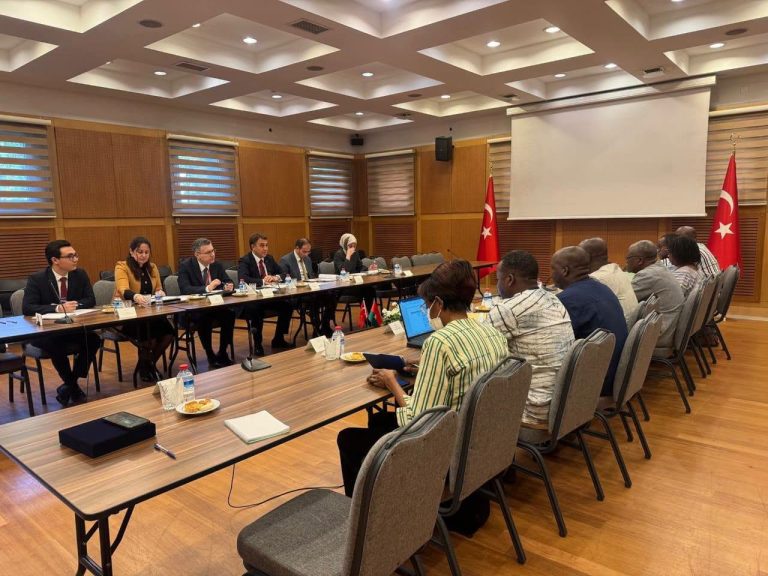



The Economic Partnership Agreement between the Eurasian Economic Union (EAEU) and the United Arab Emirates (UAE) is set to enter into force on October 6, 2026, marking a significant new stage in economic relations between the Eurasian bloc and one of the Middle East’s leading commercial and financial hubs. The agreement is expected to reduce trade barriers, expand market access and create new opportunities for businesses on both sides.
The agreement was signed in Minsk on June 27, 2025, following the completion of negotiations between the EAEU and the UAE. The Eurasian Economic Commission has described the pact as an important instrument for strengthening trade and economic relations and creating a more predictable framework for commercial cooperation.
Broad reduction in customs duties
One of the agreement’s central features is the liberalisation of trade in goods. According to the Eurasian Economic Commission, preferential treatment is expected to cover more than 90% of mutual trade, with tariff preferences applying to more than 85% of the commodity nomenclature. Some duties will be eliminated immediately, while others will be phased out over transitional periods.
For exporters, this could significantly improve the competitiveness of products entering the respective markets. Companies in the EAEU will gain greater access to the UAE, while Emirati businesses will benefit from preferential access to the markets of Armenia, Belarus, Kazakhstan, Kyrgyzstan and Russia.
The agreement also aims to make cross-border trade more predictable by improving customs procedures and facilitating the movement of goods. The text specifically highlights efficient and transparent customs procedures designed to reduce costs and provide greater certainty for importers and exporters.
A bridge between Eurasia and the Gulf
The importance of the agreement extends beyond tariff reductions. The UAE has established itself as a major logistics, financial and re-export hub connecting Asia, Africa, Europe and the Middle East. For EAEU producers, stronger commercial ties with the UAE could therefore provide access not only to the Emirati market but also to wider international supply chains.
At the same time, the EAEU represents a large integrated market with the free movement of goods, services, capital and labour among its five member states. The bloc comprises Armenia, Belarus, Kazakhstan, Kyrgyzstan and Russia.
The agreement consequently has the potential to strengthen the UAE’s role as a gateway to Eurasian markets while giving EAEU companies an expanded platform for reaching customers, investors and logistics networks in the Gulf.
Opportunities beyond merchandise trade
The partnership is not limited to customs duties. The agreement provides a framework for broader economic cooperation, including areas such as transport and logistics, competition, tourism, research and innovation, mineral resources, sustainable products and cooperation concerning halal-product standards.
This wider scope is particularly relevant as businesses increasingly look beyond conventional goods trade. Improved logistics connections, digitalisation, investment cooperation and common approaches to standards can help companies develop longer-term commercial relationships rather than relying solely on individual transactions.
Small and medium-sized enterprises are also expected to benefit. The agreement explicitly seeks to strengthen SMEs’ ability to participate in international trade and take advantage of the opportunities created by the new preferential trading framework.
Trade relations already gaining momentum
The agreement comes against a backdrop of rapidly expanding economic ties. In May 2026, Russian First Deputy Prime Minister Denis Manturov said trade between Russia and the UAE had increased by 50% in the previous year, reaching a record $14 billion. He said the EAEU-UAE agreement would contribute to improving the quality and balance of trade.
The agreement therefore arrives at a time when commercial relations are already developing quickly. Its implementation could provide a more systematic legal and tariff framework for this growth.
Strategic significance
The October 6 entry into force also carries broader strategic significance. Both the EAEU and the UAE have been pursuing policies aimed at diversifying international economic partnerships. For the EAEU, cooperation with the UAE strengthens its network of economic agreements beyond its immediate neighbourhood. For the UAE, closer relations with the Eurasian bloc fit into its broader strategy of developing trade and investment partnerships with major economies and regions.
The agreement could also encourage greater investment cooperation. Lower trade barriers and more predictable market access can make it easier for companies to consider establishing distribution centres, production partnerships and logistics operations across the two regions.
What businesses should expect
From October 6, businesses will need to pay close attention to the agreement’s rules of origin, tariff schedules, customs procedures and product-specific requirements in order to take full advantage of the preferences.
The practical impact will vary considerably by product. Companies should therefore determine whether their goods qualify for preferential treatment and examine the relevant tariff phase-out schedules before restructuring supply chains or pricing strategies.
For exporters, the agreement could offer an opportunity to reassess markets that were previously less competitive because of customs duties. Importers, meanwhile, may gain access to a broader range of products at more favourable tariff rates.
A new chapter in EAEU–Gulf economic relations
The entry into force of the EAEU-UAE Economic Partnership Agreement on October 6, 2026 will mark an important milestone in relations between the two economic blocs. With preferential treatment covering the overwhelming majority of traded goods, the agreement has the potential to stimulate two-way commerce and deepen investment and business links.
Its significance, however, will ultimately depend on how effectively companies use the new framework. Tariff preferences alone do not guarantee higher trade. Logistics, financing, regulatory compliance, standards and business-to-business partnerships will all determine the extent to which the agreement translates into real economic gains.
Nevertheless, the agreement provides something increasingly valuable in the global economy: a clearer and more predictable framework for doing business. As the UAE strengthens its position as a global trade hub and the EAEU continues to expand its network of external economic partnerships, the October 6 implementation date could mark the beginning of a deeper commercial relationship connecting the Gulf with the wider Eurasian market.
À propos de l'auteur