
In 2026, China and Egypt mark the 70th anniversary of the establishment of diplomatic relations between the two countries. Over seven decades, the two ancient civilizations have stood side by side through changing times, deepening a relationship built on historical ties, mutual respect and shared development.
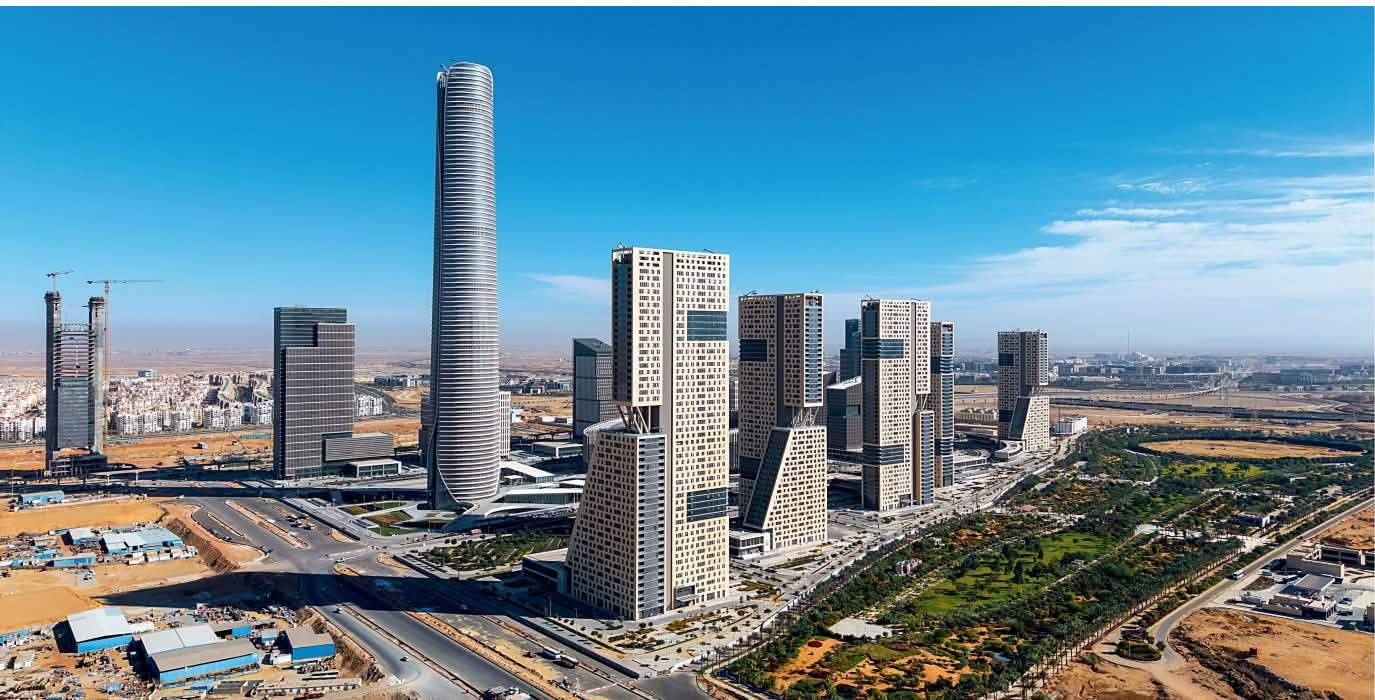
Today, that partnership is taking shape in concrete form at the heart of Egypt’s new capital, east of Cairo, where the Central Business District (CBD) has emerged as one of the most prominent symbols of China-Egypt cooperation.
A flagship project under the framework of the Belt and Road Initiative, the CBD reflects the alignment between China’s development cooperation and Egypt’s Vision 2030. More than a major construction project, it has become a living example of the comprehensive strategic partnership between the two countries and a monument to the friendship forged by Chinese and Egyptian workers together.
A Shared Vision: Building a New City in the Desert
Situated at the crossroads of Africa, Asia and Europe, Egypt occupies a strategically important position linking the Arab world and the African continent. But rapid population growth and accelerating urbanization have placed increasing pressure on Cairo, making the development of a new administrative and economic center an urgent national priority.
In 2015, the Egyptian government formally announced plans for the New Administrative Capital, envisioning a modern city based on scientific planning, integrated functions, green technologies and smart infrastructure.
The new capital is expected to play an important role in public administration, economic development and urban transformation, while responding to the aspirations of the Egyptian government and its people.
A year later, in 2016, Chinese and Egyptian leaders witnessed the signing of contracts for the construction of the Central Business District. The project is being undertaken by China State Construction Engineering Corporation (CSCEC), with the participation of CSCEC Egypt.
The project has a total contract value of approximately $3.863 billion. It covers an area of about 627,000 square meters, with a total built-up area of approximately 1.92 million square meters.
At its center stands the Iconic Tower, rising 385.8 meters and recognized as the tallest building in Africa. The development also includes 10 office towers, five luxury residential towers, four international hotels, municipal facilities and energy infrastructure.
It is the largest integrated urban complex undertaken by a Chinese company in Egypt to date, as well as one of the country’s most diverse developments in terms of functions and uses.
The transformation from vast desert to a modern urban center represents more than a change to Egypt’s physical landscape. It reflects the convergence of two national development visions.
Egyptian President Abdel Fattah El-Sisi has repeatedly praised the CBD, describing it as a “pyramid of the new era” and a “locomotive for Egypt’s future development,” underscoring its strategic significance to Egypt’s modernization.
Working Together to Overcome Challenges
Building a major urban complex in the desert has presented formidable challenges.
The project site faces extreme heat, frequent sandstorms and complicated geological conditions. At the same time, project teams have had to reconcile Chinese, European and American standards, coordinate multicultural teams and maintain stable supply chains.
Chinese and Egyptian builders responded by embracing the principles of consultation, joint construction and shared benefits. Chinese expertise in technology and project management was combined with Egyptian resources, experience and local knowledge.
Through close cooperation and mutual trust, the two sides
À propos de l'auteur