


Saudi Foreign Minister Prince Faisal bin Farhan, Egyptian Foreign Minister Badr Abdelatty and Turkish Foreign Minister Hakan Fidan held a trilateral “brotherly” meeting in the Egyptian coastal city of El Alamein, as the three regional powers stepped up consultations over developments in the Middle East.
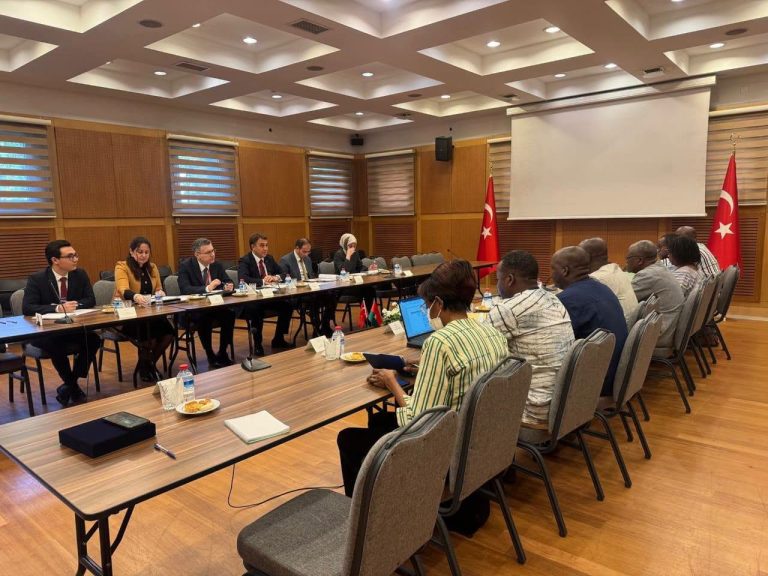
The Egyptian Foreign Ministry shared a photograph of the ministers meeting, describing the gathering as a fraternal meeting. According to the ministry, the officials discussed the latest regional developments and exchanged views on issues affecting security and stability in the region.
The meeting came during Turkish Foreign Minister Hakan Fidan’s visit to Egypt on August 13-14, where he and Abdelatty also co-chaired the second meeting of the Türkiye-Egypt Joint Planning Group. The discussions focused on strengthening bilateral cooperation and following up on decisions reached at the two countries’ High-Level Strategic Cooperation Council.
The presence of the Saudi, Egyptian and Turkish foreign ministers in El Alamein highlights the growing importance of coordination among the three countries at a time of heightened regional tensions. Cairo, Riyadh and Ankara have increasingly engaged in consultations on political, security and economic issues, with regional diplomacy becoming central to efforts to contain crises and promote stability.
The El Alamein meeting also followed broader moves toward closer security coordination involving Saudi Arabia and Türkiye. Fidan has urged Egypt to consider joining a regional defense framework established by Türkiye, Saudi Arabia and Pakistan, describing Egypt as a key country with which Ankara consults on political, security and economic matters.
Beyond security issues, Türkiye and Egypt used Fidan’s visit to advance their bilateral relationship. The two sides signed documents concerning their Joint Planning Group and amendments to the countries’ free trade agreement, while Egypt also signed an accession document related to cooperation on transport connectivity between Türkiye and African coastal countries.
The latest meeting therefore reflects not only the close diplomatic contacts among Egypt, Saudi Arabia and Türkiye, but also the emergence of broader regional consultations aimed at addressing common political and security challenges. As instability continues to affect several parts of the Middle East, coordination between influential regional capitals is expected to remain a significant feature of the region’s diplomatic landscape.
À propos de l'auteur