

Kenya is seeking to strengthen its diplomatic capabilities as the international environment becomes increasingly shaped by complex geopolitical and economic challenges.
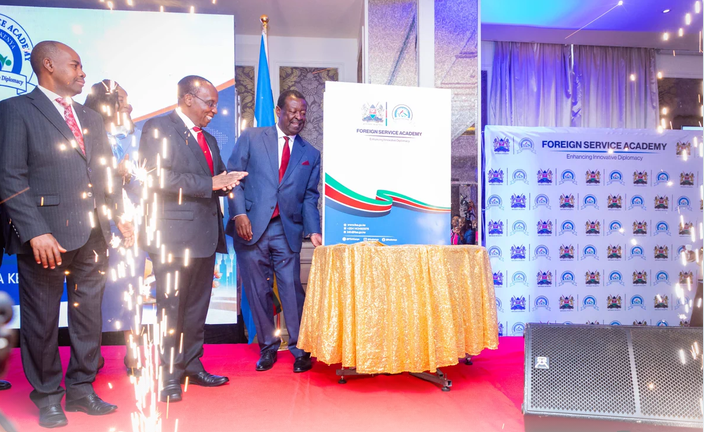
The country’s Foreign Service Academy has launched a 2026–2029 Resource Mobilization Strategy, targeting $30 million to support diplomatic training, foreign policy research, digital transformation and institutional capacity building.
According to a statement from Kenya’s Ministry of Foreign Affairs issued on Wednesday, August 26, the strategy is designed to modernize the academy’s infrastructure, expand its digital capabilities and strengthen its training and research programmes.
The long-term ambition is to transform the institution into a continental centre of excellence for diplomacy, capable of preparing African diplomats to respond more effectively to changing global dynamics.
Strengthening Africa’s voice
At the launch of the strategy, Kenya’s Prime Cabinet Secretary and Cabinet Secretary for Foreign and Diaspora Affairs, Musalia Mudavadi, called on development partners, diplomatic missions and other stakeholders to support the initiative.
Mudavadi stressed the importance of strengthening Africa’s capacity to influence international decision-making. Being present at the negotiating table, he argued, is not enough. African diplomats also need the technical expertise, strategic knowledge and analytical capabilities required to shape outcomes and effectively defend national and continental interests.
The emphasis on stronger diplomatic expertise comes as Kenya navigates an increasingly complicated international landscape. Nairobi remains involved in regional peace and security efforts, including initiatives related to South Sudan, while also playing an active role in regional integration through the East African Community (EAC).
Investing in knowledge and technology
The resource mobilization strategy places particular emphasis on research and digital transformation. By improving its research capacity, the academy aims to provide diplomats with stronger analytical tools for understanding geopolitical, economic and emerging global issues.
Investment in digital infrastructure is also expected to modernize the delivery of diplomatic education and expand access to training.
The initiative reflects a broader recognition that modern diplomacy requires expertise extending beyond traditional political engagement. Diplomats increasingly need to understand issues ranging from international trade and technology to climate change, security and regional economic integration.
A regional training institution
The Foreign Service Academy was established in 2006 as the Foreign Service Institute before being renamed the Foreign Service Academy in 2017. Since its establishment, the institution has trained more than 5,000 Kenyan officials and nationals from other countries in the region, including diplomats from South Sudan and Somalia.
With the new strategy, Kenya aims to build on this record and position the academy as a stronger regional institution for diplomatic training and foreign policy research.
Securing the targeted $30 million will therefore be central to the academy’s plans to modernize its facilities, expand its programmes and strengthen Kenya’s ability to engage effectively in an increasingly competitive international environment.
À propos de l'auteur