

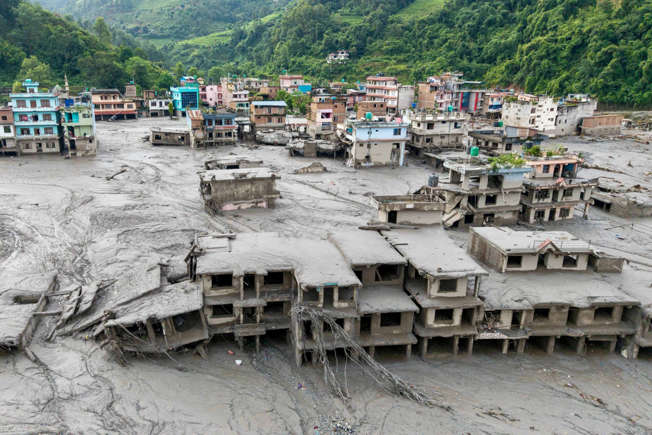
A catastrophic flash flood struck the mountainous border region between Nepal and Tibet on Wednesday, leaving hundreds dead and more than 1,000 people missing. The disaster swept through villages, roads and bridges, turning normally peaceful Himalayan valleys into scenes of destruction.
The flooding was triggered by a massive collapse of ice, rock and debris in the Himalayas. The torrent rushed into the Lhende Khola and Bhote Koshi river systems, carrying mud and boulders downstream with enormous force. Entire sections of communities were buried or washed away.
In Nepal, authorities have reported hundreds of deaths, while hundreds of people remain unaccounted for. In neighboring Tibet, Chinese authorities have also reported deaths and hundreds of missing people. Many of those affected are tourists and pilgrims travelling through the region, including people heading toward Mount Kailash.
Rescue teams are working around the clock, using helicopters and heavy machinery to search through mud and debris. But their efforts are being severely hampered by destroyed roads, collapsed bridges and difficult mountain terrain. Some communities have been cut off from the outside world, while communications remain disrupted.
The disaster has also raised fears of further flooding. A new lake has reportedly formed after debris blocked part of a river, creating the possibility of another surge if the water breaks through the natural barrier. Authorities have warned people living downstream to move to safer areas.
The tragedy has drawn international attention because of the large number of foreign nationals among the missing. Tourists from India, the United States, Britain, Australia, Canada and several other countries are still being sought.
Scientists say the catastrophe also highlights the growing vulnerability of the Himalayas. Rising temperatures are causing glaciers and frozen ground to become increasingly unstable, although experts caution that it is too early to establish a direct link between climate change and this particular collapse.
As rescue operations continue, families across Nepal and around the world are waiting anxiously for news of their loved ones. For the communities along the Himalayan rivers, the disaster has left behind a landscape of destruction and a long road toward recovery.
À propos de l'auteur